What Is a Chinese Herbal Shampoo Bar?

Updated: Oct 10
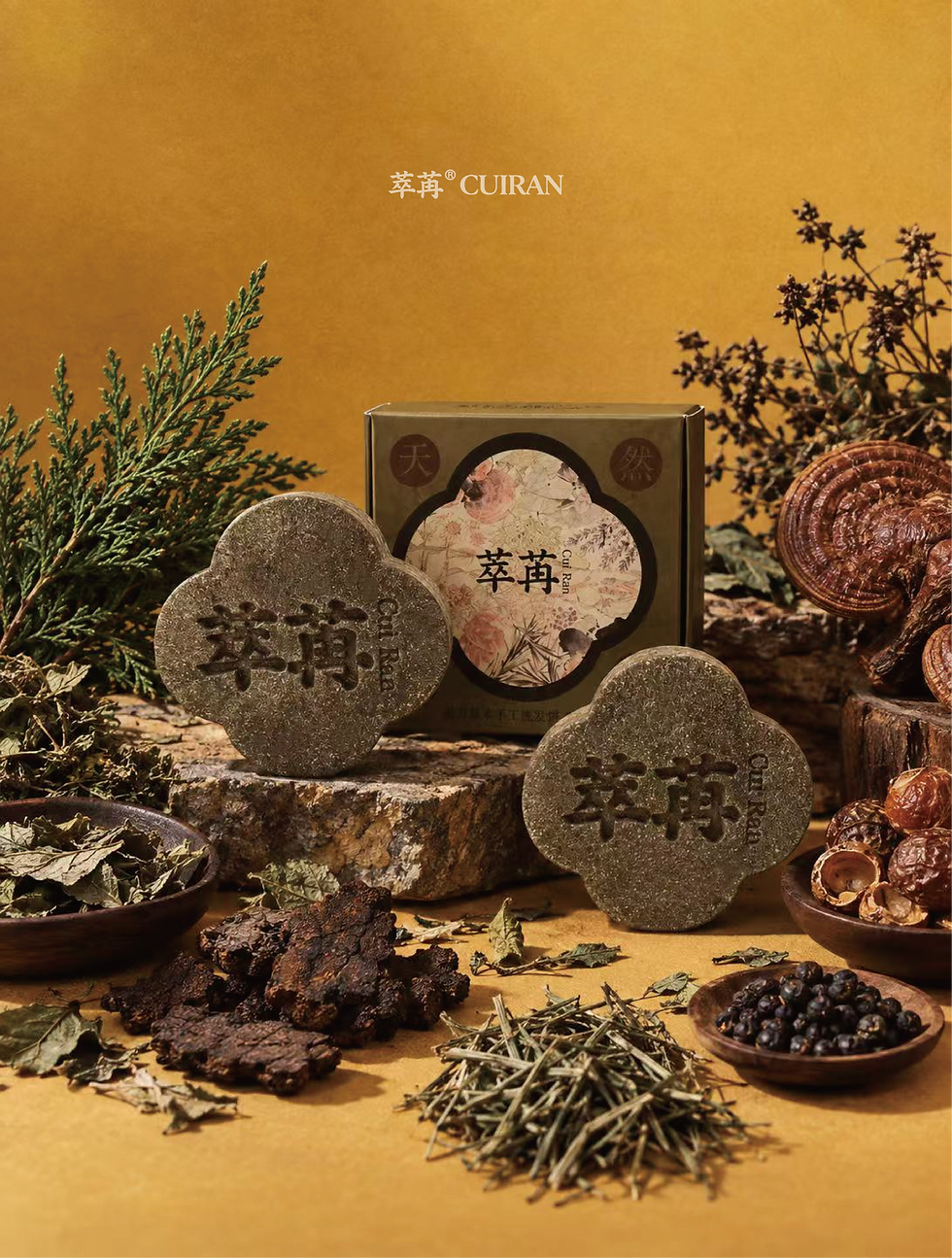
A Chinese herbal shampoo bar is a solid hair-cleansing product that combines modern shampoo-bar formulation with botanical ingredients inspired by traditional Chinese herbal practices.
Unlike a traditional soap bar, a modern shampoo bar is formulated specifically for cleansing hair and scalp. Depending on the formula, it may use surfactants—including amino-acid-based cleansing ingredients—to create lather and help remove everyday oil and buildup.
The “Chinese herbal” part refers to the botanical inspiration behind the formula: ingredients and plant traditions that have long appeared in Chinese culture, personal care and herbal practices.
At CUIRAN, we bring these two ideas together: traditional botanical inspiration and a modern solid shampoo format.
Chinese Herbal Tradition, Reimagined for Modern Hair Care
Chinese botanical traditions have explored plants for generations across food, wellness rituals and personal care.
A modern Chinese herbal shampoo bar does not simply recreate an old herbal preparation.
Instead, it takes inspiration from botanical heritage and combines it with contemporary cosmetic formulation.
That distinction is important.
Traditional use can tell us about the cultural history of an ingredient, while the performance of a finished shampoo bar also depends on its cleansing system, formulation balance, manufacturing process and overall user experience.
For CUIRAN, the goal is not to turn traditional herbal stories into exaggerated promises.
It is to bring botanical heritage into an everyday hair-care ritual that feels simple, tactile and modern.
What Botanicals Can Be Found in Chinese Herbal Shampoo Bars?
There is no single formula that defines every Chinese herbal shampoo bar.
Different products may use different botanical extracts, powders, oils or cleansing systems.
CUIRAN’s botanical story includes ingredients such as:
Chinese Arborvitae Leaf — 侧柏叶
Chinese arborvitae leaf is a recognizable botanical within traditional Chinese herbal culture and forms part of CUIRAN’s botanical inspiration.
Chinese Angelica — 当归
Chinese angelica, commonly known as Dang Gui, is one of the most familiar botanicals associated with traditional Chinese herbal practices.
Glossy Privet Fruit — 女贞子
Glossy privet fruit is another botanical with a long history of use within traditional Chinese herbal culture.
Prepared Polygonum Multiflorum — 制何首乌
Prepared He Shou Wu is widely recognized within traditional Chinese botanical culture.
When discussing ingredients like this in modern cosmetics, it is important to distinguish traditional cultural use from claims about the performance of a finished cosmetic product.
Soapnut — 无患子
Soapnut is particularly interesting in cleansing traditions because the fruit naturally contains saponins.
It has a long history of association with washing and cleansing practices in parts of Asia.
Reishi — 灵芝
Reishi is one of the most recognizable botanical and fungal ingredients in East Asian culture and forms part of CUIRAN’s broader herbal identity.
The important point is not simply how many herbs appear in a product.
When choosing a shampoo bar, it is more useful to look at what ingredients are actually present, how the cleansing system works and how the complete formula has been designed.
How Is a Chinese Herbal Shampoo Bar Different From a Regular Shampoo Bar?
The biggest difference is usually not the fact that the product is solid.
Both regular shampoo bars and Chinese herbal shampoo bars can use modern cleansing ingredients.
The difference is often found in the formulation concept and botanical identity.
A conventional shampoo bar may focus mainly on cleansing performance, fragrance, portability or reduced packaging.
A Chinese herbal shampoo bar adds another layer: botanical ingredients and a formulation story influenced by Chinese herbal traditions.
At CUIRAN, this appears in three parts:
Botanical Inspiration
Selected Chinese botanicals form part of the product’s ingredient story and visual identity.
Modern Cleansing
CUIRAN shampoo bars use amino-acid-based cleansing ingredients as part of the cleansing system.
Solid Format
The compact solid format is easy to store, use and travel with while reducing reliance on conventional liquid-shampoo packaging.
The result is not simply “traditional” or “modern.”
It sits between the two.
What Does Amino Acid Cleansing Mean?
You may see the phrases “amino acid shampoo” or “amino-acid-based cleansing” used in modern hair-care products.
Amino-acid-based surfactants are a category of cleansing ingredients used in cosmetic formulations, including shampoos and other personal-care products.
But one important point is often overlooked:
The performance of a shampoo depends on the complete formula—not one ingredient alone.
A cleansing system also depends on factors such as concentration, pH, other surfactants, conditioning ingredients and overall formulation design.
That is why CUIRAN describes amino-acid cleansing as part of the shampoo-bar system rather than presenting it as a miracle ingredient.
When water is added and the bar is worked between the hands, in a foaming net or directly on wet hair, the cleansing system creates lather that helps wash away everyday oil and buildup before rinsing.
How Do You Use a Chinese Herbal Shampoo Bar?
Using a shampoo bar is simple once you become familiar with the solid format.
1. Wet Your Hair Thoroughly
Make sure both your hair and scalp are fully wet before applying the shampoo bar.
2. Create Lather
Rub the bar between wet hands, use a foaming net, or gently apply it to wet hair according to the product instructions.
3. Massage
Work the lather gently through the hair and scalp.
4. Rinse Thoroughly
Rinse until the product has been completely removed.
5. Let the Bar Dry
Allowing a shampoo bar to dry between uses helps maintain the solid format and makes it easier to use over time.
CUIRAN recommends storing the bar where air can circulate around it after washing.
What Should You Look for When Choosing a Chinese Herbal Shampoo Bar?
A beautiful herbal story is only one part of choosing a shampoo bar.
It is better to look at the whole product.
Clear Ingredient Information
Look for brands that clearly explain which botanicals and cleansing ingredients are actually used instead of relying only on vague phrases such as “ancient formula” or “natural herbs.”
A Cleansing System Designed for Hair
A shampoo bar and a traditional soap bar are not necessarily the same thing.
Check how the product describes its cleansing system and intended use.
Realistic Claims
Botanical tradition and cosmetic performance should be communicated separately.
Be cautious when a cosmetic product makes strong medical or treatment-style claims without appropriate evidence.
Practical Design
Consider how easy the bar is to hold, lather, store and keep dry between uses.
A Formula That Fits Your Routine
No shampoo format works exactly the same for everyone.
Hair texture, washing frequency, styling products, water quality and personal preference can all influence the experience.
Why CUIRAN Makes Chinese Herbal Shampoo Bars
CUIRAN was created around a simple idea:
Chinese botanical heritage can be expressed through modern everyday objects.
Our four-leaf-clover shampoo bars combine selected botanicals with a modern cleansing system in a compact solid format.
The ritual is intentionally simple:
Wet the hair, create a creamy lather, cleanse, rinse and let the bar dry.
Rather than positioning Chinese herbal hair care as something mysterious, CUIRAN aims to make the ingredients, format and experience easier to understand.
For us, the value is in the meeting point between botanical tradition, contemporary formulation and a thoughtful daily ritual.
Explore CUIRAN Chinese Herbal Shampoo Bars
If you are curious about bringing Chinese botanical inspiration into your hair-care routine, explore the CUIRAN Chinese Herbal Shampoo Bar Collection.
You can also visit Chinese Herbal Wisdom to learn more about the botanicals behind the CUIRAN ingredient story.
Frequently Asked Questions
Is a Chinese herbal shampoo bar the same as soap?
Not necessarily.
A shampoo bar can be formulated with surfactants specifically intended for hair cleansing, while traditional soap is produced through a different formulation process.
Always check the actual ingredient list and product description instead of assuming every solid bar uses the same cleansing system.
Are Chinese herbal shampoo bars suitable for every hair type?
That depends on the complete formula and the individual user.
Hair texture, scalp condition, washing frequency, water quality and styling habits can all influence how a shampoo feels during use.
Do herbs alone clean the hair?
A modern shampoo bar generally relies on its cleansing system to remove oil and everyday buildup.
Botanical ingredients form part of the wider formulation and product concept.
How should I store a shampoo bar?
Allow the bar to dry between uses and avoid leaving it sitting in standing water.
A well-drained soap dish, upright storage method or ventilated container can help keep a solid shampoo bar dry between washes.
For practical next steps, read How to Use a Shampoo Bar. For a format comparison, see Shampoo Bar vs. Liquid Shampoo.

Comments